As businesses increasingly migrate to cloud environments, the need for effective cloud infrastructure monitoring tools has never been more critical. These tools enable enterprises to maintain optimal performance, ensure security, and manage costs in their cloud deployments. In this article, we delve into some of the leading cloud infrastructure monitoring solutions available in 2025, highlighting their features, benefits, and how they can enhance your cloud operations.
As enterprises increasingly migrate to the cloud, effective monitoring tools become crucial for maintaining performance and security. In 2025, businesses will rely on advanced cloud monitoring solutions to ensure optimal resource allocation and quick problem resolution. To navigate this landscape, organizations must Understand cloud scalability options in order to choose the right tools that align with their operational goals.
Understanding Cloud Infrastructure Monitoring
Cloud infrastructure monitoring encompasses the tools and processes used to track the performance, availability, and security of cloud resources. Effective monitoring can help organizations proactively identify and address issues before they impact Business Operations. Key benefits include:
- Improved performance: Identify bottlenecks and optimize resource utilization.
- Enhanced security: Monitor for anomalies and vulnerabilities within your cloud environment.
- Cost management: Track usage patterns to optimize spending and avoid overprovisioning.
Key Features to Look for in Monitoring Tools
As enterprises increasingly migrate to the cloud, effective monitoring tools become essential for ensuring performance and security. By 2025, companies will rely heavily on solutions that provide real-time analytics and automated alerts for their cloud environments. Understanding the latest cloud security essentials is key to maintaining a robust infrastructure.
When evaluating cloud infrastructure monitoring tools, consider the following features:
1. Real-time Monitoring
Tools should provide real-time visibility into cloud resource performance, allowing teams to address issues as they arise.
2. Comprehensive Dashboards
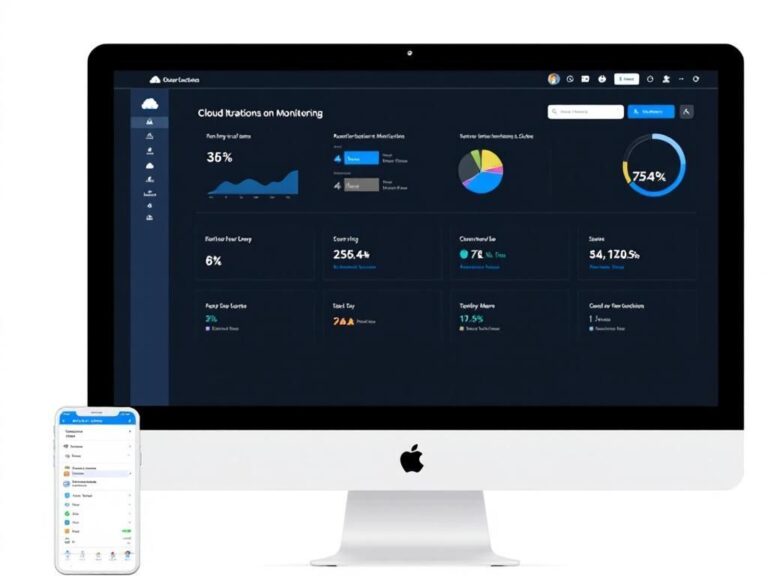
User-friendly dashboards that consolidate metrics from various resources can facilitate quick decision-making.
3. Alerting and Reporting
Effective alerting mechanisms help teams respond promptly to performance degradation or security threats.
4. Resource Management
Tools should assist in tracking resource allocation and utilization across multiple cloud environments.
5. Integration Capabilities
Seamless integration with other tools and platforms, such as CI/CD pipelines and incident management systems, is essential.
Top Cloud Infrastructure Monitoring Tools in 2025
Here’s a breakdown of some of the leading cloud infrastructure monitoring tools making waves in 2025:
1. Datadog
Datadog is a robust monitoring solution that provides a comprehensive view of cloud infrastructure, applications, and networks.
Key Features:
- Integration with over 400 applications and services.
- Real-time performance metrics.
- Customizable dashboards and alerts.
Pricing:
Starts at $15 per host per month, with additional costs for advanced features.
2. Amazon CloudWatch
Part of AWS, CloudWatch allows users to monitor cloud resources and applications in real-time.
Key Features:
- Automatic scaling options based on usage metrics.
- Detailed log management.
- Custom metric creation and alarm settings.
Pricing:
Pay-as-you-go pricing based on usage, making it cost-effective for growing businesses.
3. New Relic
New Relic offers full-stack observability, giving enterprises insights into performance from infrastructure to end-user experience.
Key Features:
- Application performance monitoring (APM).
- Infrastructure monitoring with real-time metrics.
- Collaboration tools for development and operations teams.
Pricing:
Pricing varies based on selected features; a free tier is available with limited capabilities.
4. Splunk Observability Cloud
Splunk provides end-to-end observability across cloud infrastructure and applications, utilizing AI to enhance insights.
Machine Learning & Artificial Intelligence
Key Features:
- Log analysis and monitoring.
- Machine learning-driven insights.
- Multi-cloud support with a unified view.
Pricing:
Contact sales for customized pricing based on specific needs and enterprise scale.
5. Prometheus and Grafana
For teams that prefer open-source solutions, the combination of Prometheus for data collection and Grafana for visualization provides a powerful alternative.
Key Features:
- Highly customizable dashboards.
- Flexible alerting based on metrics.
- Strong community support and extensibility.
Pricing:
Both tools are free to use, with costs associated only with Cloud Hosting or enterprise support.
Choosing the Right Tool for Your Organization
Selecting the right monitoring tool depends on several factors, including:
1. Cloud Environment
Consider whether you are using a single cloud provider or multiple providers, as some tools specialize in multi-cloud environments.
2. Team Skillset
Evaluate your team’s familiarity with the tools to ensure smooth implementation and usage.
3. Budget Constraints
Analyze your budget for monitoring tools, including initial investment and ongoing costs.
4. Specific Needs
Identify the specific features that are crucial for your organization, such as real-time monitoring or integration with other tools.
Conclusion
As cloud environments become more complex, deploying robust monitoring tools is essential for enterprises. By leveraging the right cloud infrastructure monitoring tools, organizations can ensure optimal performance, maintain security, and manage costs effectively. In 2025, solutions like Datadog, Amazon CloudWatch, New Relic, Splunk Observability Cloud, and Prometheus/Grafana stand out as top choices for enterprises striving to maximize their cloud investments.
FAQ
What are the key features to look for in cloud infrastructure monitoring tools?
When selecting cloud infrastructure monitoring tools, look for features such as real-time performance monitoring, automated alerts, detailed reporting, integration capabilities, scalability, and user-friendly dashboards.
How do cloud infrastructure monitoring tools benefit enterprises?
Cloud infrastructure monitoring tools help enterprises optimize resource usage, enhance security, improve uptime, reduce costs, and provide better visibility into their cloud environments, leading to more informed decision-making.
What are some popular cloud infrastructure monitoring tools for enterprises in 2025?
In 2025, popular cloud infrastructure monitoring tools include AWS CloudWatch, Azure Monitor, Google Cloud Operations Suite, Datadog, and New Relic, each offering unique features tailored for enterprise needs.
Can cloud infrastructure monitoring tools integrate with existing IT Systems?
Yes, most cloud infrastructure monitoring tools are designed to integrate seamlessly with existing IT systems, allowing for centralized monitoring and management across diverse environments.