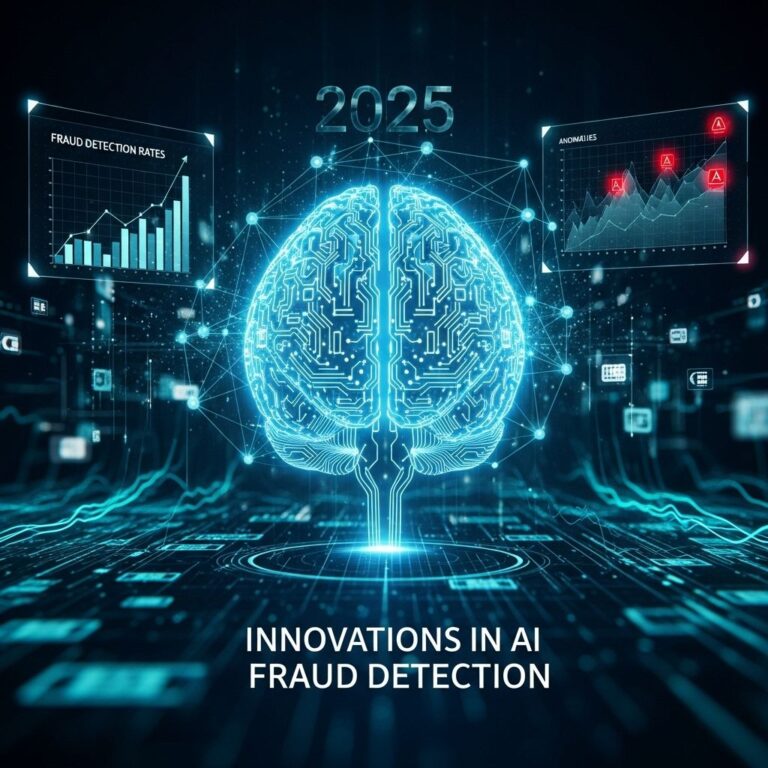
The rapid advancement of artificial intelligence (AI) has transformed numerous sectors, yet the financial and banking industries are perhaps the most affected. As cybercriminals evolve their tactics, so too must the systems designed to combat them. Innovations in AI-driven fraud detection for 2025 promise to reshape the landscape of security in financial transactions. This article delves into the cutting-edge technologies and methodologies that are anticipated to emerge this year, illustrating how they can enhance fraud detection capabilities.
As we approach 2025, innovations in AI are set to revolutionize fraud detection, significantly enhancing the accuracy and speed of identifying fraudulent activities. By harnessing advanced algorithms and machine learning techniques, organizations can better analyze vast datasets, making informed decisions faster than ever before. For more insight into the role of data analytics in this transformation, check out Understanding data analytics.
The Growing Importance of AI in Fraud Detection
Fraud detection is a critical function for financial institutions, as it helps minimize losses, protects customer interests, and maintains regulatory compliance. Traditional systems often relied on predetermined rules and heuristics, which are no longer sufficient against sophisticated fraudulent schemes. AI brings several key advantages:
Machine Learning & Artificial Intelligence
- Real-time Data Processing: AI can analyze vast amounts of data in real-time, making it possible to detect anomalies or suspicious activity almost instantaneously.
- Machine Learning Algorithms: These algorithms learn from historical data, allowing them to adapt and refine their fraud detection models over time.
- Behavioral Analysis: AI can identify unusual patterns in consumer behavior, flagging transactions that deviate from the norm.
Key Innovations in AI for 2025
As we look towards 2025, innovative AI technologies are set to redefine fraud detection, making it faster and more accurate than ever. Recent advancements in machine learning algorithms will enable financial institutions to identify patterns and anomalies in real-time, reducing the potential for fraudulent activities. For more insights on this evolution, check out the latest tech trends.
As we move into 2025, several key innovations in AI are set to enhance fraud detection systems:
1. Enhanced Predictive Analytics
Predictive analytics utilizes historical data to forecast future outcomes, and in the context of fraud detection, it can help institutions identify potential threats before they materialize. Key developments include:
- Advanced Statistical Models: Utilizing complex statistical techniques to improve the accuracy of predictions.
- Real-Time Predictive Modeling: AI systems can analyze trends and update their models in real-time to stay ahead of fraud attempts.
2. Deep Learning Techniques
Deep learning, a subset of machine learning, utilizes neural networks with many layers to analyze complex data patterns. Its applications in fraud detection include:
- Image Recognition: Effective in detecting fraudulent documents or altered images.
- Natural Language Processing (NLP): Helps analyze communication patterns to identify phishing scams or social engineering attempts.
3. Behavioral Biometrics
Behavioral biometrics focuses on user interaction patterns, such as typing speed, mouse movements, and touchscreen gestures. This technology can create unique profiles for users and flag anomalies. Key features include:
| Feature | Description |
|---|---|
| Continuous Authentication | Systems can continually verify user identity throughout a session. |
| Adaptive Learning | Biometric profiles can adapt to changes in user behavior over time. |
4. AI-Driven Cyber Threat Intelligence
Cyber threat intelligence refers to the collection and analysis of information about potential threats. AI can enhance this by:
Machine Learning & Artificial Intelligence
- Automated Threat Detection: Using AI to identify emerging threats based on patterns observed in data.
- Risk Scoring: Assigning risk scores to transactions or entities based on various factors, enabling more informed decision-making.
Challenges and Considerations
While these advancements hold great promise, several challenges must be addressed:
- Data Privacy: With increased data usage comes heightened concerns regarding consumer privacy and data protection laws.
- Bias in AI: Ensuring that AI models are free from bias is crucial to avoid unjustly flagging legitimate transactions as fraudulent.
- Integration with Legacy Systems: Many financial institutions still rely on outdated technology, making it difficult to implement advanced AI solutions.
The Future Landscape of Fraud Detection
The innovations in AI for fraud detection in 2025 will likely lead to a transformative shift in how financial institutions operate. Key expected outcomes include:
- Increased Efficiency: Reduced false positives will mean fewer legitimate transactions are flagged, improving customer experience.
- Proactive Security Measures: Institutions will transition from reactive to proactive security, anticipating fraud before it occurs.
- Greater Collaboration: Sharing threat intelligence between institutions will foster a more robust defense against fraud.
Conclusion
The landscape of AI-driven fraud detection is set to evolve dramatically in 2025. With the right innovations and adaptations, financial institutions can enhance their defenses against increasingly sophisticated fraud attempts. The integration of predictive analytics, deep learning, behavioral biometrics, and cyber threat intelligence will not only improve detection rates but also establish a more secure financial environment for consumers and businesses alike. As technology continues to advance, ongoing vigilance, ethical practices, and cooperation will be essential to navigate the future of fraud detection effectively.
FAQ
What are the latest innovations in AI fraud detection for 2025?
In 2025, innovations in AI fraud detection include advanced machine learning algorithms, real-time data processing, and enhanced predictive analytics, enabling businesses to identify fraudulent activities more efficiently and accurately.
Machine Learning & Artificial Intelligence
How does AI improve fraud detection compared to traditional methods?
AI improves fraud detection by utilizing big data analytics, allowing for the recognition of patterns and anomalies in transactions that traditional methods may overlook, thus enhancing overall detection rates.
What industries benefit the most from AI-driven fraud detection in 2025?
Industries such as finance, e-commerce, insurance, and healthcare benefit significantly from AI-driven fraud detection in 2025, as they face high rates of fraudulent activities that can be mitigated through advanced technology.
Are there any challenges associated with AI fraud detection technologies?
Yes, challenges include the need for high-quality data, potential biases in AI algorithms, and the ongoing arms race between fraudsters and detection systems, which requires constant updates and improvements.
How can businesses implement AI fraud detection solutions in 2025?
Businesses can implement AI fraud detection solutions by partnering with technology providers, investing in machine learning tools, and training their teams to understand and utilize these systems effectively.
What is the future outlook for AI in fraud detection beyond 2025?
The future outlook for AI in fraud detection beyond 2025 includes further advancements in natural language processing, integration with blockchain technology for enhanced security, and the development of more sophisticated algorithms that adapt to evolving fraud tactics.
Machine Learning & Artificial Intelligence
As we look ahead to 2025, the landscape of fraud detection will be significantly transformed by AI innovations. With advancements in machine learning, organizations will be better equipped to identify and combat fraudulent activities in real time. Explore machine learning applications to learn more about how these developments are